|
A Christian View of Passover Week Copyright © 2004-2012 By Helena Lehman of the Pillar of Enoch Ministry At http://pillar-of-enoch.com/ Table of Contents A Christian Haggadah The Connection Between Easter and Passover The Traditional Passover Service (‘Seder’) The Passover Meal Begins - The First “Kiddush” The Symbolic Meaning of the Passover Menu CHRISTIAN PASSOVER CELEBRATION IMPORTANT Note from author Helena Lehman: Note About Article Distribution:
Copyright © 2004 -2013 By Helena Lehman E-mail:
helena@pillar-of-enoch.com Website: http://pillar-of-enoch.com The Connection
Between Easter and Passover
– An Overview
Though
it is the highest Holy Day of the Christian year, Easter has traditionally
been given a much smaller emphasis than the celebration of Christmas.
However, this is an incorrect practice that should be changed. Instead,
Easter, with its clear connection to the Jewish celebration of Passover Week,
which includes the Feast of Unleavened Bread and Firstfruits Offering, should
be the central holiday among Christians. This means placing more emphasis on
spiritual things like being the light and salt of the Earth, and
re-interpreting ancient fertility symbols to de-emphasize their connection
with Earth worship among Pagans. Despite the ranting of a few radical scholars, the
supposedly Pagan symbols of Easter do not have to be discarded! On the
contrary, as symbols within the framework of the Language of God, they should
be reinterpreted in a Christian manner that can serve to help us remember the
truth of the Gospel. Unlike some scholars who have gone overboard in their
rejection or evil interpretation of all symbols, I am not advocating that every painted Easter egg or stuffed
Easter bunny should be burned in the fire! Let’s use the discernment given to
us from the Holy Spirit when approaching this reinterpretation, not the musings of the misinformed! As explored in my essay entitled “Where is Christ in Christmas?” we are not so much reinterpreting these symbols as we are re-appropriating them for the use that they were originally intended. In other words, since these symbolic things were created as good and originally had a godly purpose, we need to see them in the original light God intended, and not be clouded in our judgment of them by their Pagan misappropriation. Contrary to popular belief, many so-called Pagan
religious symbols were once godly symbols used to define the one true Creator
God by people who knew the symbolic, metaphorical Language of God. Yahweh God
reveals Himself to us through this amazing symbolic language that is built
into the fabric of the Universe.
To
learn more about it, you can read an online excerpt from “The Language of God
in the Universe,” the first of four books in “The Language of
God” series. To read its synopses, excerpts, and its table of contents, go to
http://pillar-of-enoch.com
and click on “The Language of God Book Series” button link. Just
as for Christmas, the symbols attached to Easter can be reclaimed as Christian
symbols because they speak to us with the divine allegorical Language of God
that is locked into all created things. When reinterpreted with the
discernment of the Holy Spirit, these symbols can shed light into our
understanding of Christianity. For example, since an egg serves as a womb for
a bird’s fetus, it is an excellent symbol for the womb, birth, and new life.
This symbolism is especially powerful in Christian circles, where the only
true disciples are those who have been spiritually born-again, and are being
recreated in Christ’s perfect image. Only
those who believe in, and truly desire to be led by Yahshua receive the
baptism of the Holy Spirit. At the moment this spiritual rebirth occurs, true
disciples pass through a symbolic womb and are gradually re-born in Christ’s
image. This mystical experience, however, will remain unfinished until all
Christ’s disciples are resurrected into eternal life on the Last Day. Maybe
that is partly why a hard-boiled egg always appears on the Jewish Passover
Seder plate. Though a Seder plate is not featured in this Christian Haggadah,
it can readily be incorporated into Christian Passover celebrations as well
and has much symbolic meaning. Like
the egg, rabbits or bunnies are great symbols for fertility because they
proliferate new offspring very rapidly. For the same reason, however, they
can also represent the rapidity of the spread of God’s truth in the fertile
ground of a humble, regenerated heart. In addition to these reclaimed Pagan
symbols, many biblically inspired symbols can enrich our celebration of
Easter when it is combined with Passover traditions found in the traditional
Jewish Pesach (i.e. Passover) Seder meal. The impetus to meld Easter and
Passover is heightened by the fact that Yahshua’s (Jesus’) Last Supper was
really a Jewish Passover meal. Though Yahshua and the Apostles celebrated the
Passover a day early, it was already the custom among certain sects of Jews
to do this. Celebrating the Passover just before He died provided a way for
Yahshua to show His Apostles and disciples that He was and is the fulfillment
of the promises God made to Israel at the first Passover that are
commemorated in the Seder meal’s order of Service known as a Haggadah in
Hebrew. Traditionally, Easter really begins with Palm
Sunday, which commemorates the people’s waving of palm branches in the air as
Yahshua rode into Learning the facts, I was inevitably led to ask: “Why did the early Church leaders decide to do this?” My guess is that the antagonism between proponents of the Judaic Law and Christian Grace may have been so great that the Christian leaders wished to completely divorce the Church from any association with Jewish traditions. In this manner, Easter’s rightful association with Passover Week was obscured and eventually forgotten. Through
His words and actions during His last earthly celebration of Passover,
Yahshua made it clear that He wants us to commemorate the Passover to
remember His loving sacrifice for sin. The ritual act of Communion with
Christ through the bread and wine was part of an annual event, not a weekly
one, and is the climactic finale to any Christian or Messianic Jewish
Passover celebration. As we shall see in this Christian “Haggadah” or
“storyline,” it is recalled at Passover celebrations when the Matzo or unleavened
bread and the third cup of new wine or juice are shared with the other
participants. The
commemoration of Christ’s Death and Resurrection through the symbolism of
Passover, the Feast of Unleavened Bread, and Firstfruits should hold center
stage as the most important among Christian holidays. Besides symbolizing the
Exodus story, Passover contains vivid symbols that point to Yahshua’s
sacrificial death. Yahshua’s (Jesus’) death on the Cross is the one act that
guarantees our salvation and the promise of eternal life. Without Yahshua’s
death on Passover, we would not be able to partake in the Resurrection -
which is commemorated in the day of the Firstfruits Offering during the Feast
of Unleavened Bread. This day always falls on the Sunday following Passover
and this is why our celebration of Easter falls on a Sunday. Easter
celebrates the Resurrection of Christ as the Firstfruits of the Resurrection
into everlasting life. This is known as the First Resurrection in Scripture,
and it has three distinct phases. The first occurred at Yahshua’s death, the
second phase will occur at the Rapture of the saints, and the third phase
will occur at the end of the Tribulation. Though we should emphasis Christ’s Death and
Resurrection, this does not mean that Yahshua’s birth was insignificant.
Yahshua's birth was highly important to our salvation, for without the birth
of the Messiah, our salvation from sin and death through Yahshua’s
sacrificial death would not have been possible. We should, however, keep it
at the correct time of year. This was in autumn, not in winter. Nonetheless,
Chanukah, which almost always falls in December, is another Jewish holiday
that has great significance in Christ’s birth and infancy narratives. For
more information on how Christ’s birthday came to be celebrated on December
25th instead of during the Jewish Harvest Feast of Sukkot and how we can
determine the true date for Christ’s birth, read my essay entitled “Where is
Christ in Christmas?” on the “Free Articles and Downloads” web page at http://pillar-of-enoch.com/essays/. Our commemoration of our Savior's death and resurrection should also be on the correct dates, and though Easter rightly commemorates Christ’s Resurrection on the correct day that the Firstfruits offering was offered in the Temple to Yahweh, its commemoration of the first Passover and the Exodus has been obscured because of the erroneous focus on keeping the 46-day long Lenten fast and doing penance and the Stations of the Cross on “Good Friday.” However, Easter should take place on the Sunday during the weeklong festival of Passover and the Feast of Unleavened Bread. Like Easter or the day of the Firstfruits Offering, which is always on a Sunday, the date for Passover shifts each year, and can fall any time between mid March and late April. This is because Passover is found using a lunar calendar, not a solar one like our modern Gregorian or Julian calendars. There
are many Jewish customs surrounding Passover today that can add much to our
understanding of the rich heritage we have in our faith in Yahshua (Jesus).
The material presented here in this Christian version of the Passover
Haggadah is just a small sampling of the rich Passover symbolism that we can
glean about our spiritual path to salvation and eternal life through Christ.
It is my hope that this study of Passover will aid all who read it to a much
deeper understanding and love for Yahweh God, the Holy Spirit, and their
wonderful Son Yahshua. This
Christian version of the Passover Seder was made in an effort to educate
people of the importance of Easter, Passover, and Firstfruits as the central
rituals identifying and defining our Christian faith. Since this essay is
meant to serve as a “Haggadah” or “storyline” for a Christian Passover
“Seder” or “order of service,” it is not identical to a Jewish Haggadah.
Instead, it is a Christian reinterpretation of a traditional Passover Seder
meal. Recipes have been included in this Christianized Haggadah to aid those
who wish to prepare a special dinner, and follow this guide for their own
Passover “Seder.” For this reason, I encourage people who wish to use this
Christian Passover Haggadah at their own Passover celebrations to add their
own favorite recipes and religious hymns or songs. By
incorporating ideas from the Jewish Passover service, we can correct the
errors that have crept into the Christian understanding of Easter. We can
also more clearly see what Yahshua wanted us to spiritually understand and
physically commit to when He performed a Blood Covenant ritual during the
last Passover He celebrated on Earth. We can also discover what Yahshua
desires for Spiritual Israel, His New Covenant people. Though keeping
Passover makes sense for Christians to do, however, I am not advocating that Christians become
Jews, or that they must follow all Jewish customs or Old Testament Laws! As
Spiritual Israel, we are required to keep only two commandants. When Yahshua
gave these two commandments to His disciples, they would have known that they
spiritually summarized the whole point of the Ten Commandments and the Old
Testament Law: “Jesus said to him,
’You shall love the Lord your God with all your heart, with all your soul,
and with all your mind.’ This is the first and great commandment. And the
second is like it: ‘You shall love your neighbor as yourself.’ On these
two commandments hang all the Law and the Prophets.” -- Matthew 22:37-40
(NKJ) The first of these two New Covenant commandments encompassed the first four of the Ten Commandments, and the second commandment of Yahshua (Jesus) encompassed the last five of the Ten Commandments. The fifth Commandment, the one that tells us to “Honor your father and mother,” is applicable both to loving Yahweh fully and to loving others fully. As Yahshua Himself taught, these two New Covenant Laws also encompass the whole Old Testament Law in general! This therefore does not mean that we must keep all 613 Old Testament Laws as Hassidic Jews still endeavor to do. Instead, it means that we must allow the Holy Spirit given to us by Yahshua to show us the proper way to love Yahweh and ourselves. Indeed, we cannot keep any of Yahshua’s commandments unless we are born-again. It is impossible to know God’s Will without the Spirit of Christ living inside our hearts. The first step in keeping these two Laws of Yahshua
(Jesus) is to love God our Father and God’s Son by honoring their true Names,
drawing near to both in prayer, and desiring to be like Yahshua. We also need
to ask for and receive the gifts of the Holy Spirit. Only then can we
spiritually discern how to love others as ourselves. We also keep Yah’s Law
by keeping the Sabbath in Spirit and by remembering, applying, and
commemorating the Jewish High Holy Days in an atmosphere of Christian
freedom. To see how Christians can approach keeping the Ten Commandments
without becoming burdened by a heavy yoke of legalistic Jewish religious
doctrine, see my “Sevens Signs” and “Saved By Grace“ articles on the “Free
Articles and Downloads” web page at http://pillar-of-enoch.com/essays/.
Introduction to
the Haggadah
For a Christian Passover Seder To be read aloud or explained by the Host or
Hostess: The
Passion and Death of Christ are graphically symbolized by events in the first
Jewish Passover (Hebrew: "Pesach") celebration found in Exodus.
While the Jewish Passover symbolized the deliverance of the Israelites out of
Passover is connected to a weeklong festival called
the Feast of Unleavened Bread. In the past, the week also included a day when
the first sheaf of the barley harvest was waved before Yahweh God inside the
temple by the high priest and a yearling male lamb was sacrificed. Yahshua’s
(Jesus’) death and resurrection are clearly symbolized by the offering of the
male lamb and the wave sheaf offering on this day. This offering of the
Firstfruits of the Spring harvest always occurred on the day after the weekly
Sabbath that occurred during the Feast of Unleavened Bread. This Sabbath was
also used to count forward to Pentecost forty-nine days later. Since the day of the Firstfruits Offering always
occurs on the day after the Sabbath that falls during Passover Week, it
always occurs on a Sunday! Sadly, however, Jews, and even some Messianic Jews,
now blatantly reject and ignore this teaching in their Scriptures, and insist
that the day after Passover is the correct day for the Firstfruits offering -
thereby denying the validity of the Christian use of Sunday as the day of
Christ’s Resurrection. Since
Yahshua actually rose from the dead on the day after that weekly Sabbath, it
was on a Sunday on the day of the Firstfruits offering in the Since
leaven symbolizes sin, the offering of these loaves pointed forward to the
spiritual harvest that would be reaped by the Holy Spirit - despite the
sinfulness of all people. It marked the time when Christ’s Spirit would make
it possible for people to get rid of the leaven of sin in their lives forever
through His all-encompassing gift of Grace. It is therefore fitting that
Yahshua first gave the Holy Spirit to those sinners who believed He was the
Messiah on Pentecost. This baptism with the Holy Spirit that first occurred
on the Pentecost Sunday after Yahshua’s resurrection marked the beginning of
Yahweh’s great spiritual harvest that will end on the Last Day, just before
the Great White Throne Judgment spoken of the in the Book of Revelation. Before
proceeding, Leviticus 23:9-12,15-16, Acts 2:1-4, 1 Corinthians 15:20-23, and
Revelation 20:11-12 should be read aloud. (Here, you can make your Passover celebration more fun by
pre-printing cards with specific sections of Scripture and passing one or
more out to each guest to read aloud to everyone present.) To be read aloud
or explained by the Host or Hostess: Before Passover and the Feast of Unleavened Bread, there were seven days set aside for ritual purification. Leaven was totally removed from homes as the homes were meticulously cleaned. This springtime house cleaning is an important symbolic act that signifies our eradication of sin from our lives so that we can be holy before God and serve him with purity and truth. Also during this time, tombs were whitewashed on roads to protect travelers from becoming ritually unclean from coming into contact with human remains. Many other events often take place just before Passover among Jews to this day: business deals are made, apprentices are taken, marriages are arranged, and, in the past, slaves could choose to be indentured (pierced) on the doorpost of their Master's house. This was done with a sharp metal object that was pierced through the ear, leaving some of the slave's flesh and blood embedded into the wood of the doorway. This
piercing ceremony served as a sign of the slave's desire to stay a slave to a
particular master or family for the remainder of their life. Likewise,
Yahshua (Jesus) chose to be indentured as a servant to God the Father forever
when He was pierced with thorns, nails, and a spear on the Cross at
The First Passover
In
The first Passover was filled with many symbols that pointed to the
role Christ would play in our salvation from sin when He died on the Cross.
By examining the Passover story, our understanding of Yahshua (Jesus) and His
mission here on Earth can be greatly enriched. The Passover marked the
beginning of the Israelite wandering in the wilderness of Sinai as shepherds
without an earthly place to call home. This recalls the fact that Yahshua is
the Good Shepherd whose sheep won’t have a place on Earth to call home until
Yahshua comes again and sets up His Kingdom on Earth. Now,
ask someone to read Exodus 12:1-11, 21-31 To
be read aloud or explained by the Host or Hostess: The following
Passover symbols have much spiritual meaning: ·
The year-old male lamb without defect was
slaughtered and its blood was used to mark the doors of the homes to protect
its occupants from death. The lamb represented Yahshua (Jesus), who shed His
blood and gave up His life on the cross for our sins. The doorways were
marked with the blood of the lamb using a sign of the cross! This was done by
pooling the blood in a hollowed pit at the foot of the doorway. Then the
hyssop branch was dipped in the blood and the blood was smeared first on the
top lintel and then on the two side posts. The lamb’s blood represented the
blood of Christ, the Lamb of God. The wooden doorways represented the cross
on which He died, and the hyssop branch represents Yahshua as the righteous
“branch” of ·
The four cups of wine drunk during a
Passover celebration have much symbolic meaning as well. These cups of wine
are consumed as blessings are recited over those gathered together to share
in the Passover feast. The blood of the lamb on the doorposts of the homes of
those who kept the first Passover and Yahshua’s (Jesus’) own blood are
symbolized by these cups of wine. Just as the four blood-marked posts of the
doorways protected the Israelites from the death angel who passed over Egypt,
the four branches of Yahshua’s bloodstained Cross sanctifies us and protects
us from the fate of eternal death and separation from God. With His shed
blood, Yahshua washes us clean and allows us to be refreshed and renewed by
His Holy Spirit. This guarantees our place in heaven, and in the presence of
Yahweh God for eternity. The cup of wine we Christians drink at Communion symbolizes the shared wine of the Jewish Passover meal. Since it signifies Christ’s shed blood, sharing the wine is a sign of our equal placement in the New Blood Covenant we enter with Yahweh through Christ. The New Blood Covenant we enter into with Yahweh through Yahshua is a solemn oath of fealty and allegiance between God and man. It promises that we will be resurrected with perfect, imperishable bodies when Yahshua comes again in glory and that we will live forever with Yahshua in the New Jerusalem. ·
The unleavened bread eaten at Passover
signified freedom from sin. It represents Yahshua's (Jesus') sinlessness as
well as our own purity when we mark the door of our hearts with Yahshua's
blood and accept him as our Savior. Leaven or yeast signified sinfulness
because sin is associated with excessive pride, or being “puffed-up.” During
the Passover Seder, three pieces of Matzo are hidden inside a single bag with
three pockets and the central piece is broken and hidden, then found later in
the meal. This single bag with three Matzos inside serves as an unmistakable
symbol for the triune God Yahweh, and the broken center piece serves as a
perfect metaphor for the broken body of Christ, who died for our sins. The
first Passover secured the deliverance of the Israelites out of sinful Now,
ask someone to read 1 Corinthians 5:6-8
The Traditional
Passover Service (‘Seder’)
From
A Christian Perspective To be read aloud
or explained by the Host or Hostess: We have
gathered together on this special day (or night) to explore the events of The
Last Supper. We will do so by examining the rituals of the traditional
Passover service, which is what the Last Supper actually was. The customs of
Yahshua’s era were very different from our own. For example, instead of
sitting on high-backed chairs as we do today, the people of Yahshua's day
reclined on cushions on the floor around low tables when they ate meals. The
roast lamb that was served at Passover feasts could not have any bones broken
and therefore was roasted whole. The Passover service of Yahshua's day was a
family affair and twenty to forty people often gathered to celebrate the
Passover together. This was because the meat of the yearling lamb slaughtered
for the occasion could comfortably feed that many people and none of the meat
could be left until morning. This is significant in that Yahshua (Jesus) had no
broken bones when He was crucified, unlike the other two men who were
crucified with Him. In addition, Yahshua was removed from the Cross just
before nightfall. Now, ask someone
to read John 19:32-37 To be read aloud
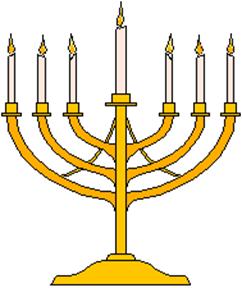
or explained by the Host or Hostess: A leader is always chosen from among the guests to officiate at the Passover meal. The leader is usually the oldest and most respected male member of the group. Yahshua (Jesus) served as the leader, or host, at the Last Supper. It was the leader’s responsibility to make sure all the lamb was consumed and to offer the Passover blessings over the wine. More than fourteen men were likely gathered in the Upper Room with Yahshua since the Passover is always considered a group family event. It is therefore likely that the wives and children of Yahshua's apostles and the beloved disciple, as well as some of the women who followed Yahshua (Jesus) were also present during the Passover meal - though the women and children very likely ate at their own table. On the tables where they gathered, there were likely one or more seven-branched oil lamps that are called Menorahs in Hebrew. Today, these oil lamps have seven or nine branches and are filled with more than oil or candles. They have much symbolic spiritual meaning that can only be seen through the divine language of allegory. Yahshua discerned their allegorical meaning when He said: “You are the light of the world. A city that is set on a hill cannot be
hidden. Nor do they light a lamp and put it under a basket, but on a
lampstand, and it gives light to all who are in the house. Let your light so
shine before men, that they may see your good works and glorify your Father
in heaven.” - Matthew 5:14-16 (NKJ) And, "I am the light of the world. He who follows Me shall not walk
in darkness, but have the light of life." - John 8:12 (NKJ) The spiritual light we possess is therefore the light of Christ
shining through our actions, words, and deeds. In fact, oil is symbolic of
the action of the Holy Spirit, who gives us the fuel we need to act in a
godly manner and shun sin. A Menorah, especially one fueled by oil, is
therefore a powerful spiritual symbol that can be incorporated into the
Christian celebration of Passover as well as other holy days. Now,
ask someone to read Mark 14:12-17. To be read aloud
or explained by the Host or Hostess: As already
mentioned, the Jewish Passover Seder is the re-telling of the Exodus story. The
written text that describes the events of the “Seder” or “order” and its
content is called a “Haggadah,” or “storyline.” For Christians and Messianic
Jews, the Passover Haggadah should also recall the death and Resurrection of
Yahshua (Jesus). The traditional opening for the Seder story is the
“Kiddush,” or “blessing,” given by the host of the feast. Interestingly, the
mother or oldest woman in each Jewish household says this same blessing at
their Friday evening Sabbath gatherings (Note: Jews reckon days from sunset
to sunset, so evening comes before daytime).
|